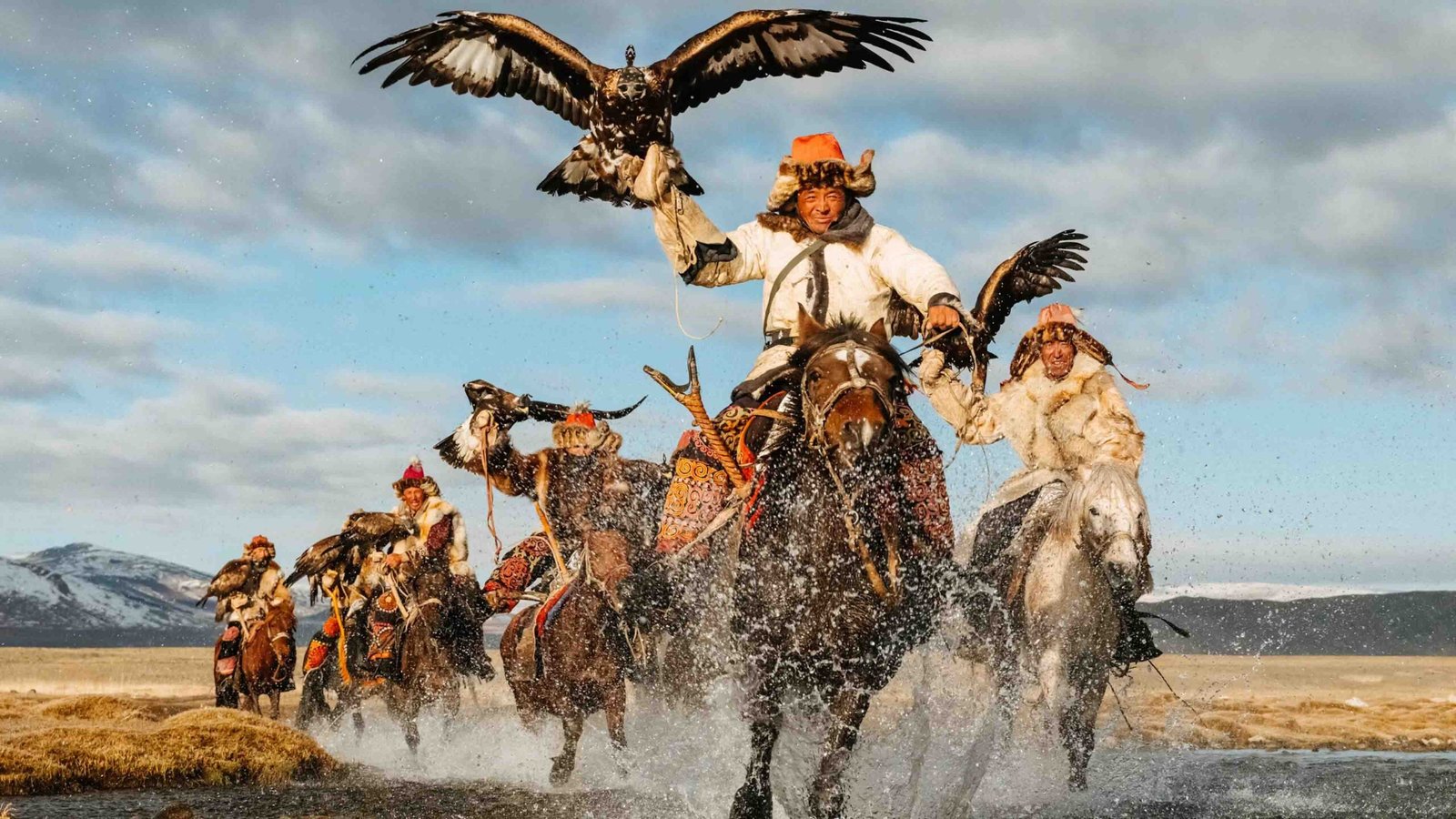
A rare cultural journey into Mongolia’s spiritual landscapes where monastery bells, sacred ruins, nomad hospitality, taiga edges, and living shamanic traditions reveal a country shaped by silence, belief, and vast space.
Mongolia is not a place that can be rushed. It asks you to travel differently with patience, respect, and a willingness to let the horizon become part of the experience. This journey moves east from Ulaanbaatar into landscapes where history, spirituality, and nomadic life still hold deep presence: temple ruins touched by wind, sacred lakes under endless sky, ger camps glowing at dusk, and communities whose connection to land is both practical and profound.
At its heart, this is a journey of listening. Listening to monastery chants in the capital. Listening to wind moving through grasslands. Listening to stories carried by nomad families, spiritual practitioners, and local hosts. The shamanic encounters are approached with sensitivity and dignity not as performance, but as living belief systems rooted in ancestry, nature, and the unseen.
Begin your journey toward Mongolia a destination that feels less like a place you visit and more like a rhythm you enter. Even before arrival, the shift begins: from routine to openness, from crowded schedules to wide horizons, from familiar noise to the promise of silence.
The steppe has a way of rearranging time. It slows the body first, then the mind. As you travel eastward, you begin to leave behind the ordinary and move toward a country where distance feels sacred, and space is part of the story.
Mood: Anticipation, transition, inner departure
Arrive in Ulaanbaatar, Mongolia’s capital a city where glass towers, traffic, temple roofs, and nomadic memory coexist in unexpected layers. After a smooth arrival and time to refresh, begin with Gandan Monastery, one of the country’s most important Buddhist centres. Prayer wheels turn, monks move through courtyards, incense lingers in the air, and for a moment the pace of the city softens around you.
Continue into Mongolia’s spiritual and cultural story with a thoughtful introduction to shamanic traditions and a museum visit that gives context to what lies ahead. The focus is not spectacle it is understanding. You begin to see how belief, land, ancestry, and everyday life are woven together across Mongolia’s vast spaces.
Evening brings a calm welcome dinner: warm food, introductions, and the first conversations that will frame the journey ahead.
Overnight: Ulaanbaatar
Mood: Cultural grounding, spiritual context, soft arrival
Leave the capital and drive east into Mongolia’s open country. The city falls away quickly, replaced by rolling land, scattered herds, and a horizon that seems to keep moving farther away. This is the first true taste of the steppe immense, quiet, and humbling.
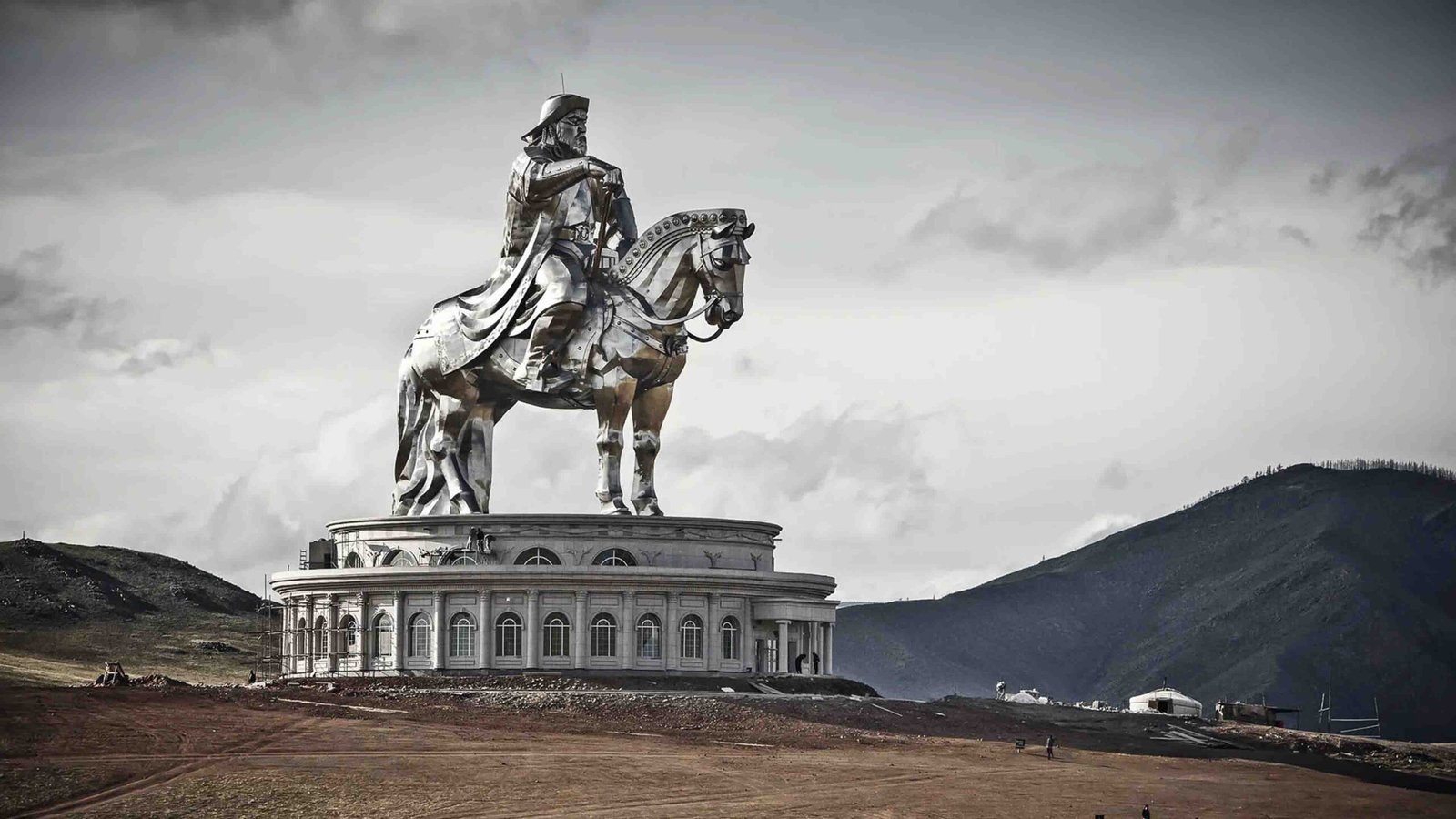
Pause at the Chinggis Khan Statue Complex, a monumental landmark that reflects Mongolia’s deep relationship with its imperial past. From there, continue toward Khukh Nuur, a peaceful lake resting beneath vast sky. Water, grass, and wind meet here with an almost meditative simplicity.
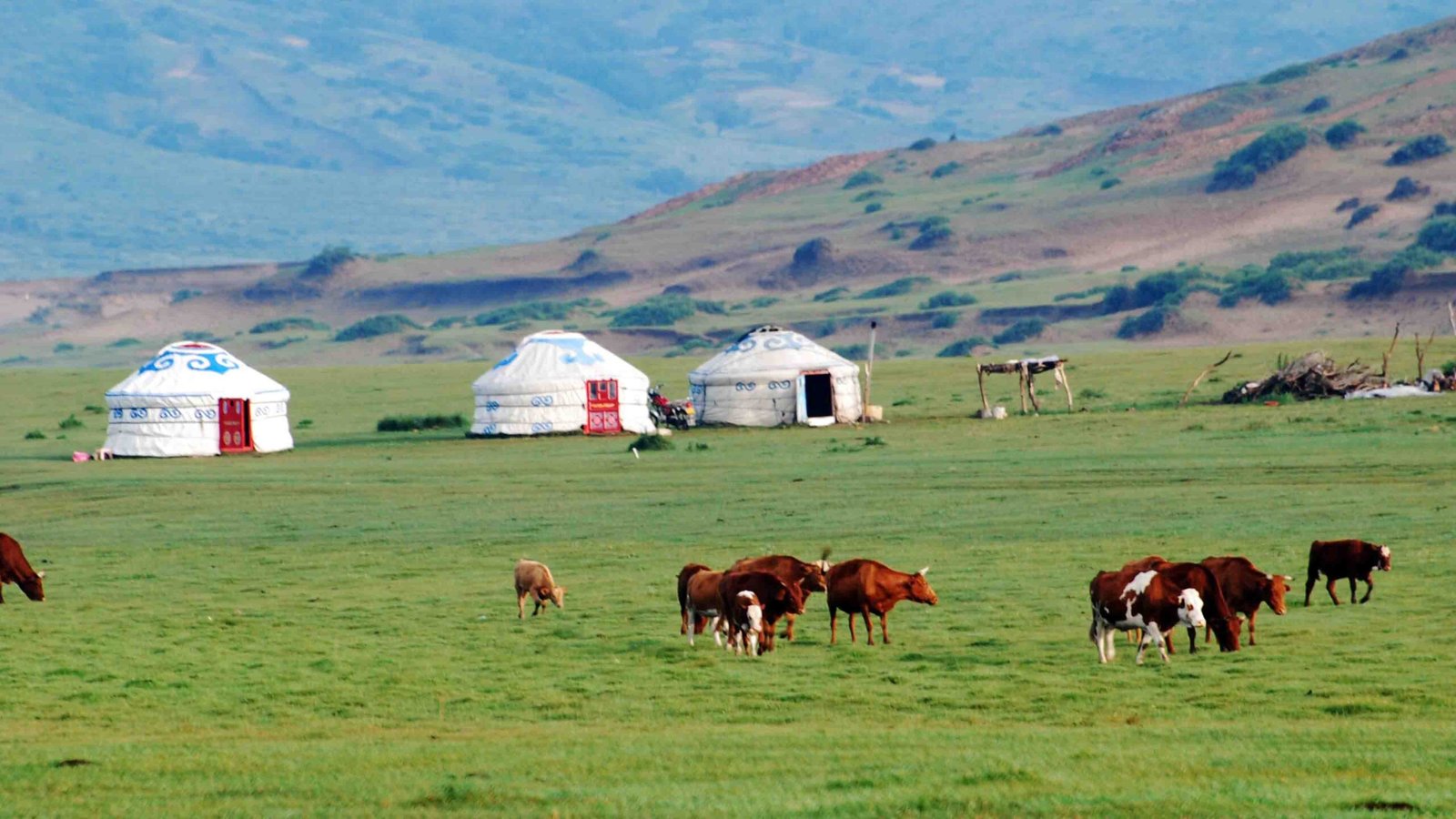
By evening, settle into your first ger camp. The circular form of the ger, the warmth inside, the open land outside everything feels beautifully elemental. Dinner is simple and nourishing. Night arrives with wind moving across the steppe and stars appearing in impossible numbers.
Overnight: Ger camp near Khukh Nuur / Bayan-Uul region
Mood: First wilderness, historical scale, steppe silence
Today, the journey moves through landscapes where spirituality feels embedded in the earth itself. Visit the ruins of Baldan Bereeven Monastery, once an important religious centre. Its stones hold both beauty and loss temple remains, prayerful silence, mountains watching over everything. It is the kind of place where history does not need to be loud to be powerful.
Continue toward the Uglugch Wall, an ancient stone structure set within a dramatic natural landscape. A gentle hike allows time to feel the place rather than simply photograph it. The land here has weight: forest edges, stone, sky, and the sense of stories still held in the terrain.
Later, meet a nomad family in a respectful hosted encounter. Tea is shared, daily life is explained, and hospitality becomes a bridge between worlds. This is the Inescape way human, unhurried, and dignified.
By evening, arrive at an eco-lodge or simple countryside stay. Comfort is modest but meaningful: warmth, quiet, and space to absorb the day.
Overnight: Eco-lodge / countryside stay
Mood: Sacred landscapes, slow hiking, nomad connection
Drive deeper into eastern Mongolia, where the steppe begins to meet the edges of the taiga. The scenery shifts subtly more trees, softer contours, a sense of entering a land where wilderness gathers closer.
Arrive in the region of Dadal Soum, associated with Deluun Boldog, widely recognised as the birthplace area of Chinggis Khan. Here, history feels less like a monument and more like a landscape. Springs, memorials, and open fields invite reflection on a figure whose legacy moved across continents, yet whose origin belongs to this quiet terrain.
The day is paced gently, with pauses for photography, tea, and silence. By evening, settle into a ger camp. Warm food, clear air, and the distance from everything unnecessary make the night feel restorative.
Overnight: Ger camp near Dadal
Mood: Taiga-edge wilderness, origin stories, quiet reverence
Return toward the Bayan-Uul region for the first day of your shamanic immersion, depending on seasonal access and local arrangements. This experience is approached with care, humility, and respect. The intention is not to consume a ritual, but to understand a living tradition on its own terms.
The day begins with introductions and cultural framing. You learn how Mongolian shamanism relates to land, ancestors, spirits, healing, and the natural world. Conversations may unfold with practitioners or local hosts, offering insight into how belief systems continue to shape identity across remote communities.
If rituals or ceremonies are offered, they are treated as sacred cultural expressions not performances. Photography and participation follow local guidance. Evening includes quiet time to reflect, because some experiences are best understood slowly.
Overnight: Shaman centre / local ger stay
Mood: Respectful immersion, cultural listening, spiritual depth
A second day allows the experience to deepen. With more time, the conversations become less introductory and more intimate. You may learn about ritual objects, songs, healing traditions, ancestral relationships, and the way Mongolian spirituality often moves between Buddhism, shamanism, nature reverence, and family memory.
This is a day of listening more than doing. You are invited to observe thoughtfully, ask carefully, and allow the experience to remain partially mysterious. Inescape journeys honour the idea that not everything must be explained to be meaningful.
By the end of the day, you carry a rare understanding: that belief here is not separate from landscape. It belongs to mountains, forests, rivers, animals, weather, and the people who live in continuous relationship with them.
Overnight: Shaman centre / local ger stay
Mood: Deep cultural listening, reflection, ancestral connection
Begin the return journey through wide steppe roads and quiet towns. Travel via Undurkhan, a place that feels like a small stitch in Mongolia’s immense map modest, practical, and deeply connected to the routes that pass through it.
After days in remote landscapes and spiritual spaces, today is deliberately grounding. Check into a simple hotel and let the body rest. The mind may still be catching up with what the heart has taken in: sacred ruins, open skies, conversations, rituals, and the strange peace of distance.
Evening is easy dinner, rest, and a quieter kind of comfort.
Overnight: Undurkhan
Mood: Grounding, transition, reflective return
Continue toward Gun-Galuut Nature Reserve, a beautiful protected landscape where steppe, wetlands, rivers, and hills come together. Here, the journey returns to nature in its gentler form.
Take short hikes or nature walks, watching for birdlife and wildlife depending on season and conditions. The pace is soft and flexible—designed for presence, not performance. Later, visit a nomad family and learn more about steppe livelihoods: herding, milk, seasonal movement, and the practical intelligence required to live in such open country.
This final ger stay feels like a closing ritual. The land is still vast, but by now it may feel less foreign. You have begun to understand its silence.
Overnight: Ger camp in Gun-Galuut
Mood: Nature reserve, wildlife, final nomad encounter
Return to Ulaanbaatar, where the modern city now feels different after the openness of the east. The afternoon is free for thoughtful shopping and gentle exploration. Cashmere, leatherwork, felt goods, and locally made objects offer a way to bring home something with texture and provenance.
Rather than rushing through souvenir stops, we guide you toward meaningful purchases—objects connected to craft, material, and place. The final evening is calm, allowing space to close the journey with gratitude.
A farewell dinner may be arranged: one last table, one last conversation, and the slow realisation that Mongolia has entered you quietly.
Overnight: Ulaanbaatar
Mood: Return, craft, closure
Transfer to the airport for your onward journey.
You leave not simply with stories to tell, but with a changed relationship to silence, belief, and space. Mongolia’s gift is subtle. It does not overwhelm all at once. It follows you home in the memory of wind against the ger, monastery bells in the city, sacred stones in open country, and a horizon that seemed to have no end.
End of journey.
Yes. This journey is suitable for first-time visitors who want a deeper, more cultural introduction to Mongolia. It combines Ulaanbaatar, sacred landscapes, ger camp stays, nomad family interactions, nature reserves, and spiritual traditions in a thoughtfully paced route.
This is not a highlights-only itinerary. The journey focuses on Mongolia’s spiritual and cultural depth—Buddhist monasteries, shamanic traditions, sacred ruins, nomad hospitality, steppe landscapes, and places connected to Chinggis Khan’s legacy. It is designed for travellers who want meaning, context, and quiet immersion.
A visit or stay at a shaman centre is included seasonally and subject to local availability, permissions, and practitioner guidance. If rituals or ceremonies are offered during your visit, they will be approached respectfully as living traditions, not as staged performances.
No. The shaman centre experience is seasonal and depends on local schedules, gatherings, weather, and community permissions. Final availability will be confirmed at the time of booking.
Travellers are expected to be respectful, quiet, and culturally sensitive. Photography, recording, participation, or questions should only happen with permission. Your guide will brief you on etiquette before any spiritual or cultural interaction.
Accommodation is a mix of city hotels, traditional ger camps, simple regional hotels, and eco-lodge stays depending on the route. In remote areas, accommodation is chosen for access, authenticity, and comfort within local conditions.
A ger camp stay offers a traditional Mongolian accommodation experience in wide steppe landscapes. Facilities are generally simple but atmospheric, with warm meals, open skies, and a strong sense of place. Some camps may have shared bathroom facilities depending on location.
This is a boutique cultural journey rather than a conventional luxury resort-style trip. Comfort is curated where possible, especially in Ulaanbaatar, but the remote nature of the route means some stays are simple. The luxury lies in access, silence, space, cultural depth, and meaningful experiences.
The journey is generally moderate. It involves long drives, light walks, gentle hikes, nature reserve visits, and time in remote areas. It does not require advanced fitness, but travellers should be comfortable with overland travel and simple conditions in some locations.
Yes. Mongolia is vast, and overland travel is a key part of the experience. Some days include long scenic drives through steppe, semi-taiga landscapes, small towns, and remote regions. The route is paced with stops for rest, photography, and cultural visits.
Yes, the itinerary includes hosted interaction with nomad families where scheduled. These encounters are designed to be respectful and meaningful, offering insight into daily life, livestock traditions, seasonal movement, food, hospitality, and the relationship between people and land.
The best time is generally from late spring to early autumn, especially May to September. Weather conditions, road access, and seasonal gatherings can influence the final route and shaman centre availability.
Pack layered clothing, a warm jacket, comfortable walking shoes, sun protection, personal medicines, a reusable water bottle, and a small day bag. Even in summer, Mongolia can be windy and cool in the evenings, especially in open steppe regions.
Vegetarian meals can be arranged with advance notice, especially in Ulaanbaatar. In remote areas, food choices may be simpler, but we coordinate with camps and hosts wherever possible.
Internet access is generally available in Ulaanbaatar and some larger towns. In remote ger camps, eco-lodges, and steppe regions, connectivity may be limited or unavailable. This is part of the journey’s appeal: a rare chance to disconnect and be present.
This journey is best suited for adults, older children, or teenagers who are comfortable with long drives, remote stays, and cultural travel. For families with younger children, we recommend customising the route with shorter drives and additional comfort stops.
Yes. The journey can be adapted as a private tour with adjusted pacing, upgraded stays where available, additional days in Ulaanbaatar, extra nature time, or a softer route for travellers who prefer more comfort.
Travel insurance is strongly recommended. Your policy should ideally cover medical needs, trip cancellation, delays, emergency assistance, and travel in remote areas.
Some remote areas, cultural visits, or spiritual experiences may require local permissions or advance coordination. Any required access arrangements will be confirmed during the booking process.
Because this journey requires sensitivity, context, and careful pacing. Inescape curates the experience around respectful access, cultural dignity, local connection, and the quiet beauty of Mongolia’s landscapes—so the journey feels meaningful rather than performative.
Booking & Payments: 100% Deposit confirms reservation.
Cancellations: Apply as per policies and notice period; full schedule shared at booking.
Route Flexibility: Mountain roads and border corridors can change due to weather or local permissions; we may reroute to maintain safety and experience quality.
Altitude & Health: High altitude can affect travelers differently. Guests must disclose relevant conditions and follow acclimatization guidance.
Insurance: Strongly recommended for medical + evacuation coverage.
Responsible Travel: We prioritize local partners and ethical experiences; respectful conduct is required at cultural sites and villages.