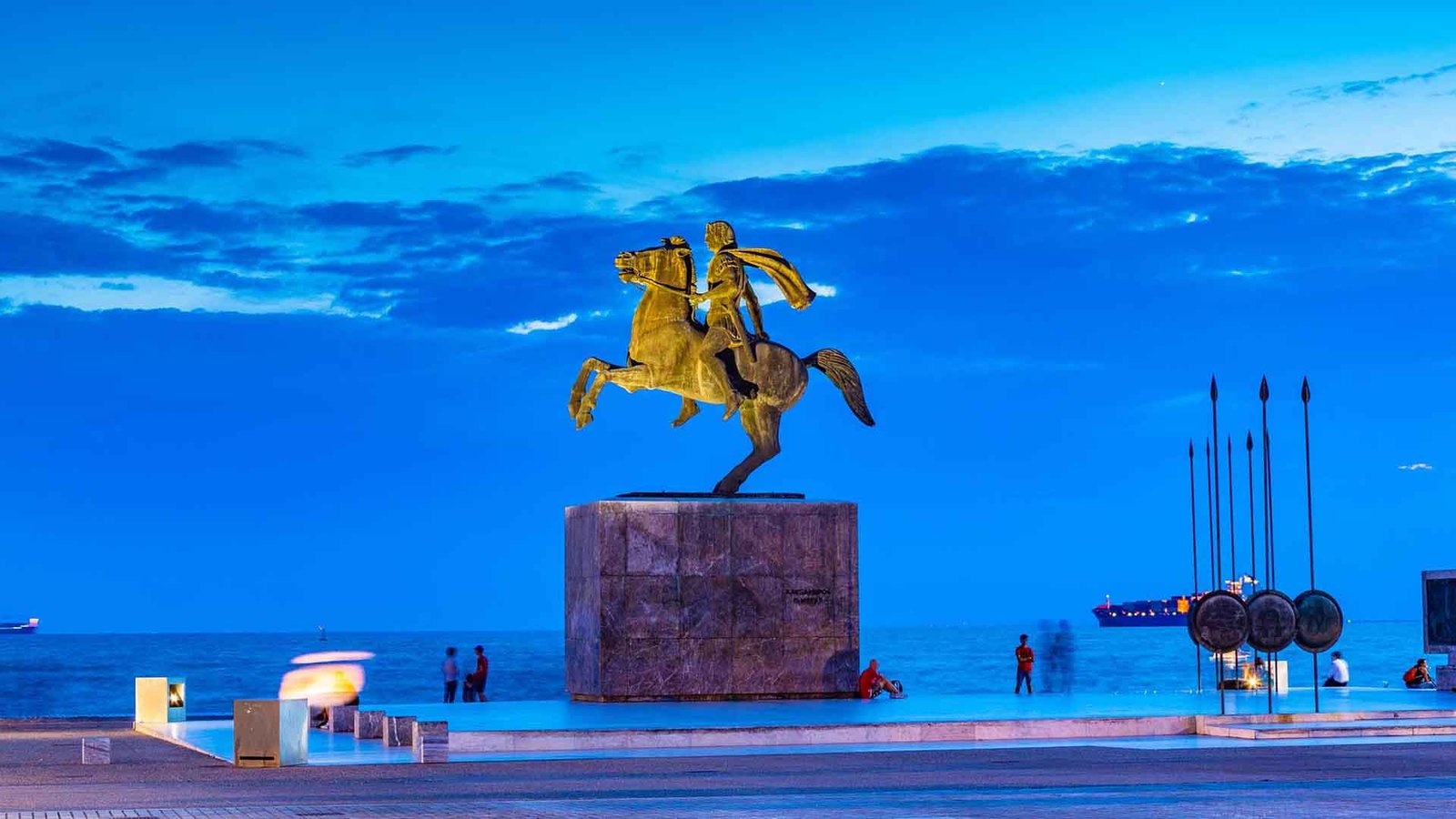
In the Footsteps of Alexander
Macedonia, Ancient Greece & The World That Made a Legend
A sweeping history-led journey through northern Greece, Macedonia, Delphi, Olympia, Athens, Thebes, Thermopylae, and Dion tracing the landscapes, ideas, cities, sanctuaries, and battlefields that shaped Alexander the Great’s world.
Some journeys follow places. This one follows an idea how a young prince from Macedonia inherited a world of myth, philosophy, politics, war, and ambition, and carried it beyond the horizon of the known world.
This is not a simple ancient Greece tour. It is a layered passage through the landscapes that formed Alexander: Thessaloniki’s museums and Macedonian memory, Pella’s palace grounds, Mieza’s philosophical quiet, Vergina’s royal tombs, Amphipolis’ strategic weight, Delphi’s sacred slopes, Olympia’s civic ideals, Corinth’s political theatre, Athens’ classical brilliance, Thebes’ war stories, Thermopylae’s heroic terrain, and Dion’s sanctuary beneath Mount Olympus.
The journey is crafted for travellers who want history to feel alive not as dates and monuments, but as terrain, light, stone, strategy, belief, and human imagination. You move across Greece with context and atmosphere, allowing each site to become part of a larger narrative: the making of Alexander, the world he inherited, and the enduring power of the ancient Mediterranean.
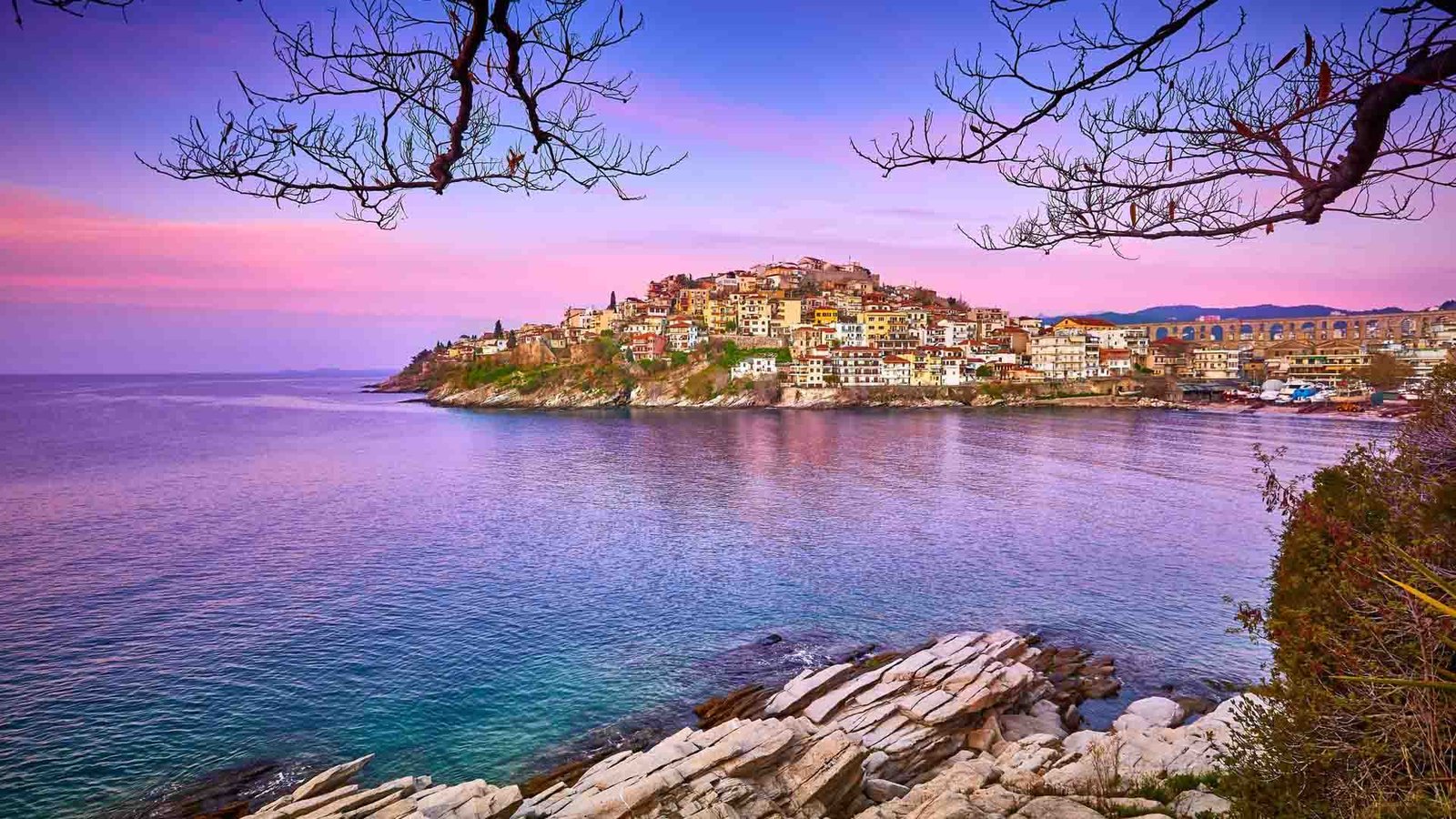
Arrive in Thessaloniki, Greece’s northern cultural capital and the natural starting point for a journey into ancient Macedonia. The city sits between sea and history Byzantine walls, Ottoman traces, Roman remains, café culture, and a waterfront that glows beautifully at dusk.
After check-in, gather for a welcome drink and dinner. Tonight is not heavy with information; it is an elegant beginning. You meet the route, the rhythm, and the story that will unfold over the coming days: the Macedonia that shaped a boy into a legend.
Overnight: Thessaloniki
Mood: Arrival, welcome, first encounter with Macedonia
Today lays the intellectual foundation for the journey. Begin with Thessaloniki’s archaeological collections, where the world of ancient Macedonia begins to emerge through gold, sculpture, inscriptions, armour, funerary objects, and everyday artefacts.
This is where Alexander’s story is framed not as myth, but as civilisation. You begin to understand the kingdom that preceded him: its royal houses, burial customs, military culture, artistic influences, and relationship with the wider Greek world.
The city itself adds texture. Thessaloniki is layered—Roman avenues, Byzantine churches, Ottoman-era corners, modern cafés, and a living urban rhythm that reminds you Greece is never only ancient. It is continuous.
Evening is free for a slow dinner by the sea or a quiet walk along the promenade.
Overnight: Thessaloniki
Mood: Context, museum depth, narrative foundation
Today you step onto Alexander’s ground.
Begin at Pella, the ancient capital of Macedonia and birthplace of Alexander the Great. Walk through the archaeological site where palace remains, courtyards, streets, mosaics, and public spaces suggest the scale and sophistication of the Macedonian court. This was not a remote kingdom on the edge of history; it was a political and cultural force gathering confidence.
The mosaics are especially evocative—fragments of elegance, power, hunting scenes, myth, and courtly life. Here, Alexander becomes more tangible: not yet conqueror, but child of a royal city, formed by ambition and proximity to power.
Continue to Mieza, associated with Aristotle’s instruction of the young Alexander. The site carries a quieter energy. If Pella represents origin through blood and monarchy, Mieza represents origin through mind: philosophy, ethics, science, politics, and the idea that knowledge could become empire.
The day is about beginnings—where a king was born, and where a worldview began to form.
Overnight: Thessaloniki / Macedonia region
Mood: Origins, philosophy, royal childhood
Today, the journey crosses into North Macedonia for Herakleia Lynkestis, an ancient city with Roman and Byzantine layers set in a quiet landscape. This cross-border movement adds important context: ancient Macedonia was never limited by modern borders. Its story moved through mountains, valleys, trade routes, and strategic corridors.
At Herakleia, mosaics, ruins, theatre spaces, and basilica remains reveal how cities evolved across centuries—from Hellenistic roots to Roman authority to Christian transformation. The site becomes a lesson in continuity: empires rise, faiths shift, cities adapt, and the land holds memory.
Return through Western Macedonia’s forested landscapes. The drive itself explains history: terrain, distance, mountain passes, and settlement patterns make ancient strategy easier to understand.
Overnight: Western Macedonia / Thessaloniki region
Mood: Cross-border memory, layered civilisations, geography as history
Begin in Kastoria, a lakeside town where the pace softens. After days of royal capitals and historical weight, the lake offers a pause—water, hills, old neighbourhoods, and a quieter northern Greek atmosphere.
Continue to Aiani, a site that adds deeper Macedonian context. Its archaeological remains help broaden the picture of the ancient kingdom: this was a world of regional centres, local elites, burial traditions, and political networks that existed long before Alexander’s conquests.
Later, visit Edessa, known for its waterfalls and elevated landscape. Nature enters the journey like punctuation—water, air, sound, and movement after the stillness of stone. It is a reminder that ancient sites were never isolated from landscape. Power, settlement, and belief were always shaped by rivers, hills, plains, and routes.
Overnight: Macedonia region
Mood: Lakeside pause, ancient depth, nature as punctuation
Today brings you to Olynthos, one of the most revealing urban sites of ancient Greece. Unlike places that overwhelm through monuments, Olynthos fascinates through clarity. Streets, houses, domestic layouts, and neighbourhood planning are visible with startling order.
Here, history becomes intimate. You do not only imagine kings and armies; you imagine households, courtyards, meals, storage rooms, workshops, and the daily organisation of a city. Olynthos allows you to see ancient life at human scale.
The day ends with a coastal viewpoint, where the Aegean Sea stretches outward like a promise. This is Greece as both land and horizon—a place where city-states looked seaward, traded, fought, and imagined worlds beyond their own shores.
Overnight: Northern Greece / Macedonia region
Mood: Urban life, ancient domesticity, Aegean horizon
Today connects two powerful threads: thought and conquest.
Begin at Stageira, associated with Aristotle’s origins. After visiting Mieza, this stop adds another layer to the philosopher’s presence in Alexander’s world. Aristotle was not an abstract influence; he belonged to landscapes, communities, and political realities that shaped his own thinking.
Continue to Amphipolis, one of the great strategic sites of northern Greece. Its position mattered—routes, river access, resources, military movement. This was a place where ambition gathered momentum. Alexander’s eastern campaign begins to feel less like a legend and more like logistics: men, supplies, ships, roads, alliances, and command.
The day reads like a prologue to conquest, grounded not in myth, but in place.
Overnight: Northern Greece / Macedonia region
Mood: Philosophy, strategy, the threshold of empire
Enter the heartland of royal Macedonia.
The Vergina region offers one of the journey’s most profound encounters: royal tombs, museum collections, gold artefacts, funerary architecture, and the quiet grandeur of Macedonian kingship. This is where power becomes ceremonial, where death becomes art, and where royal identity is preserved with extraordinary force.
The experience is deeply atmospheric. You are not only looking at objects; you are standing near the centre of a dynasty’s memory. The splendour of the burial finds speaks to wealth and authority, but also to belief—what rulers carried into the afterlife, and how kingdoms chose to remember themselves.
Evening is slow. A good meal, local wine, and reflective conversation allow the day to settle properly.
Overnight: Macedonia region
Mood: Royal memory, tombs, gold, dynastic power
Travel to Philippi, a site where histories overlap in remarkable ways. Founded and reshaped through Macedonian and Roman ambition, Philippi later became important in early Christian history. Its ruins speak in multiple voices: theatre, forum, basilicas, streets, military memory, and sacred transformation.
The landscape feels strategic. You can sense why this place mattered—position, movement, visibility, control. Here, Greece’s classical, Macedonian, Roman, and Christian worlds begin to converge.
This is one of the journey’s great layered days: not a single story, but many stories occupying the same stones.
Overnight: Northern Greece / Macedonia region
Mood: Crossroads, empire, faith, layered history
Today is a transition day, but an important one. The journey begins to move from Macedonia toward central Greece, shifting the narrative from Alexander’s origins to the wider Greek world he inherited.
Curated stops along the way can be shaped around timing, landscape, and interest. The drive allows Greece to unfold slowly: mountain forms, agricultural plains, coastal glimpses, and towns that hold smaller chapters of history.
By evening, arrive near Delphi, ready for one of the ancient world’s most powerful sacred landscapes. The mood changes here. After days of kingship and strategy, you enter the world of prophecy, sanctuary, ritual, and divine consultation.
Overnight: Delphi region
Mood: Transition, anticipation, sacred approach
Delphi sits on a slope that feels chosen. The mountains rise dramatically, the valley falls away below, and the site seems suspended between earth and sky. It is easy to understand why the ancient Greeks considered this place sacred.
Explore the sanctuary, temple remains, theatre, treasury structures, and museum treasures. The experience is not only visual; it is spatial. You move upward through a sacred landscape where pilgrims once came seeking guidance, rulers sought legitimacy, and cities displayed devotion.
Delphi adds a vital dimension to the journey. Alexander’s world was not only military and political. It was spiritual, symbolic, and deeply attentive to signs, gods, and sacred authority.
Take time at the viewpoints. The mountains here hold the horizon like a prophecy.
Overnight: Delphi region
Mood: Sacred slope, oracle, mountain silence
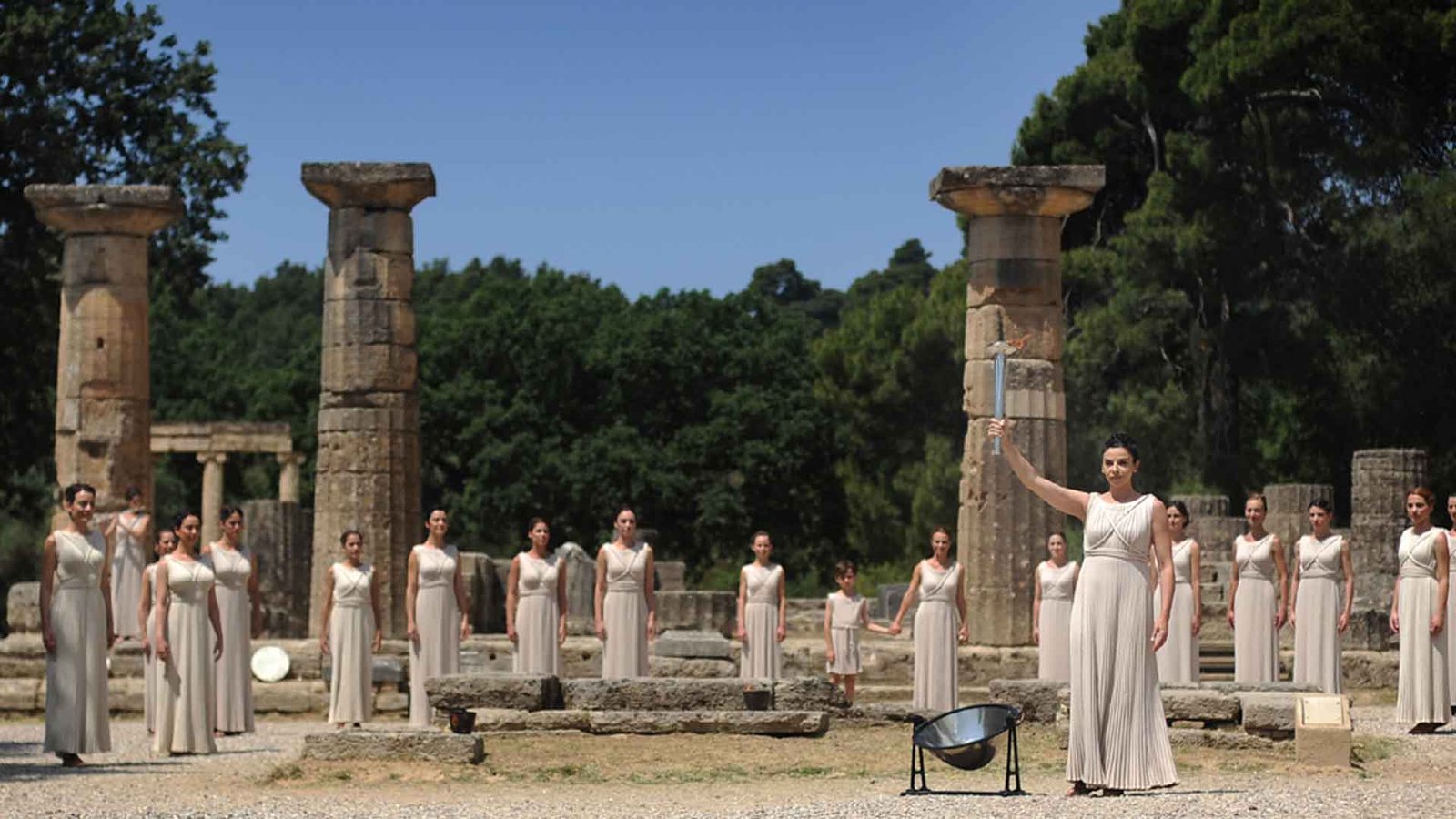
Travel onward to Olympia, where the ancient Games were not entertainment in the modern sense, but ritual, identity, honour, and civic religion.
Walk the stadium, sanctuary spaces, temples, and museum collections. Imagine athletes arriving from across the Greek world, cities represented through bodies in motion, and competition framed as devotion. The idea feels surprisingly modern and deeply ancient at once: discipline, excellence, recognition, and belonging.
Olympia offers a different kind of power from Macedonia’s palaces or Delphi’s oracle. Here, the body becomes political; the athlete becomes symbolic; the Games become a meeting place for the Greek imagination.
Overnight: Olympia region
Mood: Athletics, honour, sacred competition
This day is designed for breath.
After the intensity of major sites, the Peloponnese offers slower pleasures: coastal roads, village pauses, local tavernas, olive groves, soft light, and the everyday beauty of Greece beyond its monuments.
This is not a day away from history; it is a day that makes history human. Long lunches, countryside drives, small churches, local wine, and conversation create the space needed to absorb the journey’s scale.
Inescape intentionally keeps moments like this in the itinerary. Without pause, even the greatest sites blur together. With pause, they begin to speak.
Overnight: Peloponnese region
Mood: Breath, countryside, slow cultural texture
Explore the regions around the gulf, where ports, roads, and strategic landscapes shaped ancient alliances and conflict. The journey now shifts from Macedonian origins to the broader world of Greek city-states, leagues, rivalries, and maritime connections.
This day helps explain why geography mattered so deeply in antiquity. A port was not just a harbour; it was power. A road was not just movement; it was influence. A narrow crossing or high viewpoint could change the fate of armies and cities.
The experience is interpretive and atmospheric—less about one single monument, more about understanding the political geography of ancient Greece.
Overnight: Gulf / Corinth region
Mood: Strategy, ports, alliances, political Greece
Arrive in Corinth, one of the great strategic centres of ancient Greece. Its position near the isthmus gave it extraordinary importance, controlling movement between mainland Greece and the Peloponnese, land and sea, east and west.
Explore ancient Corinth and the landscapes associated with political assembly, trade, and power. Then climb or visit Acrocorinth, the great fortified height above the region. From here, the views stretch across land and water, and strategy becomes visible. You understand why this place mattered—not abstractly, but physically.
Corinth anchors the political arc of the journey, showing the world Alexander inherited: proud cities, competing interests, alliances, ambition, and the constant negotiation of power.
Overnight: Corinth / Athens region
Mood: Strategy, high views, political theatre
Arrive in Athens, the great counterpoint to Macedonia.
Here, the journey shifts into the heart of classical Greece: the Acropolis, the Parthenon, civic spaces, and the museum collections that illuminate the city’s artistic and political imagination. Athens represents a different kind of power—less royal, more civic; less dynastic, more philosophical and democratic in its ideals.
For Alexander’s story, Athens matters not only as a city, but as a symbol. It was a cultural force that Macedonia admired, challenged, absorbed, and ultimately carried into a wider world.
Evening is best spent in Plaka, where lantern-lit lanes, tavernas, and the Acropolis glowing above the city create a fittingly beautiful close to the day.
Overnight: Athens
Mood: Classical brilliance, civic ideals, evening atmosphere
Today softens the pace. Athens is best understood when given time.
Spend the day deepening your museum experience, exploring neighbourhoods, or taking a curated walk through the city’s lesser-known corners. The National Archaeological Museum or other specialist collections can be added depending on interest.
This day gives travellers space to choose their own Athens: art, archaeology, cafés, bookshops, contemporary culture, rooftop views, or simply a slower morning. After so many monumental landscapes, the city’s everyday life becomes part of the experience.
Overnight: Athens
Mood: Leisure, museum depth, personal discovery
Today returns history to terrain.
Visit Thebes, a city with a powerful role in Greek myth, politics, and military history. Its story is complex—heroic, tragic, strategic, and deeply tied to the shifting balance of power in ancient Greece.
Continue to Thermopylae, where landscape and legend meet. The battlefield is best understood not as an isolated monument, but as geography: a narrow pass, a defensive position, a place where terrain shaped memory. A picnic or reflective pause here allows the weight of the site to settle.
This is history as landscape—not abstraction, but wind, stone, road, and distance.
Overnight: Central / Northern Greece region
Mood: War memory, terrain, heroic geography
The final chapter brings you to Dion, a sanctuary at the foot of Mount Olympus. It is a beautiful and fitting close: sacred space, Macedonian devotion, water, trees, ruins, and the mythic presence of the mountain itself.
Dion connects the journey back to Alexander and Macedonia. It was a place of worship, ceremony, and identity—a sanctuary where kings, soldiers, and communities understood themselves in relation to gods, land, and destiny.
Return to Thessaloniki for a farewell dinner. The circle closes where it began, but the map now feels transformed. Macedonia, Greece, philosophy, war, sanctuaries, cities, and legends have become connected.
Overnight: Thessaloniki
Mood: Sacred closure, Olympus, farewell reflection
Transfer out after breakfast.
You leave with a narrative stitched across the map: Pella’s palace stones, Mieza’s philosophical quiet, Vergina’s royal memory, Delphi’s sacred slopes, Olympia’s stadium, Corinth’s strategic heights, Athens’ classical brilliance, Thermopylae’s pass, and Dion beneath Olympus.
Alexander’s world is no longer distant. It has become terrain, light, stone, and story.
End of journey.
Yes, but it is best suited for travellers who want a deeper historical and archaeological journey rather than a general Greece highlights tour. It includes Athens, Delphi, Olympia, Corinth, and key Macedonian sites, but the focus is strongly cultural and history-led.
This journey does not only visit famous sites. It traces the world that shaped Alexander—his birthplace, education, royal Macedonian heartland, strategic landscapes, Greek sanctuaries, battlefields, and classical cities—creating a connected narrative across the map.
Alexander is the central thread, but the journey also explores ancient Macedonia, classical Greece, Greek city-states, Roman and Byzantine layers, sacred sanctuaries, philosophy, warfare, politics, and the wider Mediterranean world.
The trip is moderate. Expect walking at archaeological sites, museums, old towns, and uneven ancient terrain. Some sites involve slopes, steps, or open landscapes, so comfortable walking shoes are essential.
Yes. This is a 20-day journey across multiple regions of Greece, with one cross-border element. Some days include longer drives, but these are balanced with curated stops, scenic landscapes, and slower evenings.
Yes, the itinerary includes a visit to Herakleia Lynkestis in North Macedonia, subject to final routing, border conditions, and traveller visa requirements.
Visa requirements depend on your nationality and the final route. Since the itinerary may include Greece and North Macedonia, travellers should confirm entry requirements for both countries before booking.
Accommodation is arranged as per the selected hotel category. In larger cities such as Thessaloniki and Athens, boutique or premium options can be arranged. In smaller towns, the best available comfortable stays are selected.
Yes, especially for couples who enjoy history, archaeology, museums, landscapes, food, wine, and slow cultural travel. The journey has a rich intellectual focus but also includes beautiful towns, scenic drives, and relaxed evenings.
It can work well for families with older children or teenagers interested in ancient history and mythology. For younger children, the itinerary may feel too site-heavy unless customised with a softer pace and more leisure time.
Specialist guiding can be arranged for key archaeological and historical sites. For a journey of this depth, expert interpretation is strongly recommended.
Entrance fees for included sites and museums can be built into the final package. The exact list will be confirmed during booking based on final routing and site availability.
Spring and autumn are ideal for this journey, offering pleasant weather for archaeological sites and fewer crowds than peak summer. Summer is possible but can be hot, especially at open-air sites.
Yes. The trip can be upgraded with premium hotels, private guides, private lectures, curated wine experiences, fine dining, additional rest days, and slower pacing in Athens, Delphi, the Peloponnese, or Thessaloniki.
Yes. A shorter version can focus only on Macedonia and northern Greece, or only on Athens, Delphi, Olympia, Corinth, and the southern classical sites. The full version is best for travellers who want the complete narrative arc.
Pack comfortable walking shoes, breathable clothing, sun protection, a hat, layers for cooler evenings, and a small day bag. For museum and site days, light clothing and sturdy footwear are recommended.
Because a journey this historically rich requires careful storytelling and pacing. Inescape curates the route so the sites do not feel isolated; they connect into a living narrative of power, philosophy, faith, landscape, and legacy.
Booking & Payments: 100% Deposit confirms reservation.
Cancellations: Apply as per policies and notice period; full schedule shared at booking.
Route Flexibility: Mountain roads and border corridors can change due to weather or local permissions; we may reroute to maintain safety and experience quality.
Altitude & Health: High altitude can affect travelers differently. Guests must disclose relevant conditions and follow acclimatization guidance.
Insurance: Strongly recommended for medical + evacuation coverage.
Responsible Travel: We prioritize local partners and ethical experiences; respectful conduct is required at cultural sites and villages.